Regional Training Center for Water Resources and Irrigation

0
Your Cart
Your Cart
No products in the cart.
About RCTWS

Long Experience As A Training Center

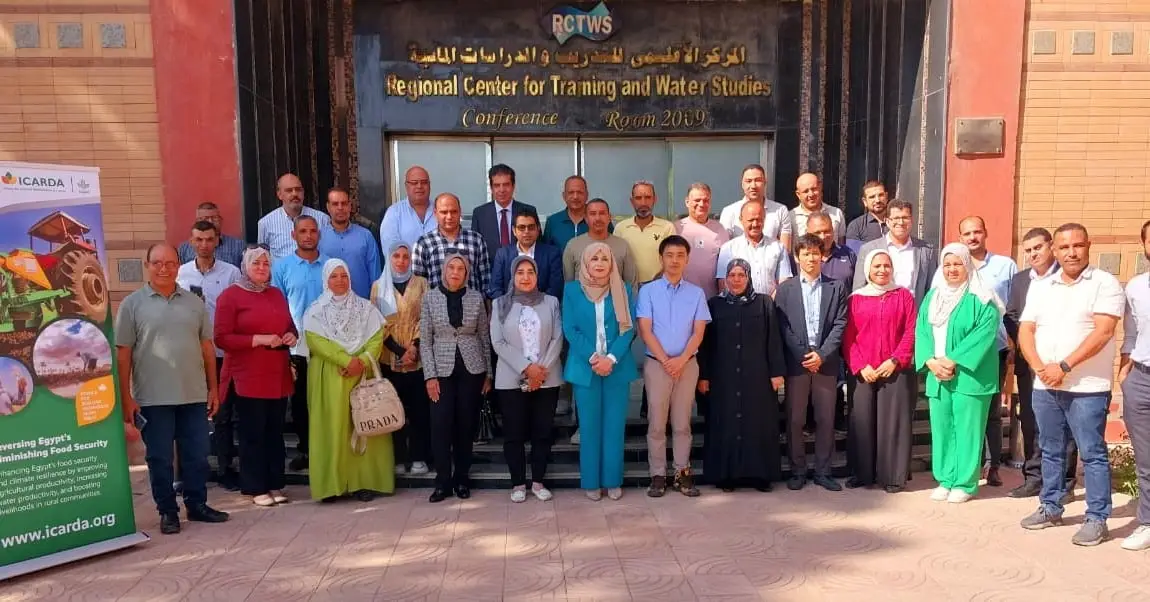
The training center serves as the Ministry of Water Resources' educational arm, accredited by UNESCO and other national bodies. It aims for excellence in training and human resource development by offering diverse programs to enhance skills across various fields. It provides local and regional training for ministry employees and others, covering technical, administrative, legal, and leadership training.
The center offers a variety of programs at both local and regional levels as ministry employees, other ministries, civil society members, and individuals from regional countries. Locally, it provides programs for all categories of ministry staff, including engineers and administrators. These programs range from technical and engineering training for engineers in various specializations, as well as computer and language programs, financial and administrative affairs, legal programs, leadership preparation, and promotion programs.

A hub regional center capable of facilitating learning and development in water management within and outside the country.

256+
Enrolled Learner
236+
Finished Session
99%
Saticfaction Rate
83+
Awards Winning
How About RCTWS

Opportunity for Advanced Learning

Newsletters

Get Our Every Single Notifications

Trusted By Our Partners

Our History

About RCTWS

Know Something About Our Programs Culture at RCTWS

RCTWS provides regional programs on integrated water management for African and Arab trainees, along with initiatives for civil society, like a course on utilizing water hyacinth for handicrafts. It ensures high-quality training by collaborating with professional trainers from various sectors. Key goals include continuous program development based on needs and feedback, and establishing partnerships with academic and other organizations.
One of the center's key goals is the continuous development of training programs based on the training needs of different ministry sectors and the feedback from target groups, as well as pursuing accreditations for the training courses offered. The center has established cooperation protocols with academic institutions and local, regional, and international entities.

Develop your life

We're here for you from start to finish.

95% Saticfied
Students
A hub regional center capable of facilitating learning and development in water management within and outside the country.
MISSION
A hub regional center capable of facilitating learning and development in water management within and outside the country.
VISION

In 1982, a training unit was established to enhance the capabilities of MWRI’s engineers in irrigation and drainage. By 1994, this unit was upgraded to a training center in 6th of October City, aimed at building capacity for MWRI’s staff across various fields. In 2002, an agreement was signed between the United Nations Educational, Scientific, and Cultural Organization (UNESCO) and the Ministry of Water Resources and Irrigation (MWRI) of Egypt. Under this agreement, the center was designated as a Category II water center named the “Regional Center for Training and Water Studies (RCTWS),” operating under UNESCO’s Intergovernmental Hydrological Program (IHP-IX). As a result, RCTWS’s role in improving water systems efficiency expanded to regional and international levels. The agreement with UNESCO was renewed for an additional 8 years, extending until 2030.

RCTWS aims to equip trainees with essential information, skills, and innovative methods to enhance their abilities, positively influence their behaviors and attitudes, and improve their performance levels

Our Strategy

RCTWS strategy entails four main pillars, which are learning and growth, financial sustainability, internal process and water sector needs. It addresses the critical need of how to introduce and optimize knowledge and technologies in water management processes in a balanced way. RCTWS strategy is lined up with the six IHP-VIII water security themes.